
By Jonathan Whitehead, N.Dip Civil Engineering, Penetron Africa
As a Penetron Engineer, I have been involved in numerous large scale concrete projects across Africa and one rhetorical theme throughout is, the structures are not designed to last and fall well short of the desired service life, especially infrastructure. Many clients require durable concrete which can be easily achieved with technology today and one of the most popular methods is Crystalline Technology. A little more on this later.
No one is safe from costly repairs and most concrete structures fail sooner than you would think because of the lack of maintenance, a shortfall of skills during construction and more so than ever, budget constraints. Most project teams are also not aware of the costs involved when it comes to concrete repairs, when comparing material costs. On average, concrete repair products cost several times more per volume when compared to the costs of concrete, so why not build it durable and maintenance free from the beginning?
Understanding Why Concrete Fails Prematurely
In order to understand why concrete fails prematurely, one needs to understand what can influence the durability of concrete and below are a few factors to consider:
- Aggressive environments (chlorides, sulphates, carbonation, high groundwater tables)
- Design compromises driven by short-term budgets
- Variable quality control during construction
- A lack of emphasis on durability at the design stage
All of the above may affect the concrete in various stages of its life, from design until the end and that is why it is critical to consider durability as a design parameter when structures are still in design phase and this mindset is continued throughout the construction period. Small changes in design like increased concrete to reinforcing cover and crack width design and even the curing regime during construction can be specified and the quality can be controlled.
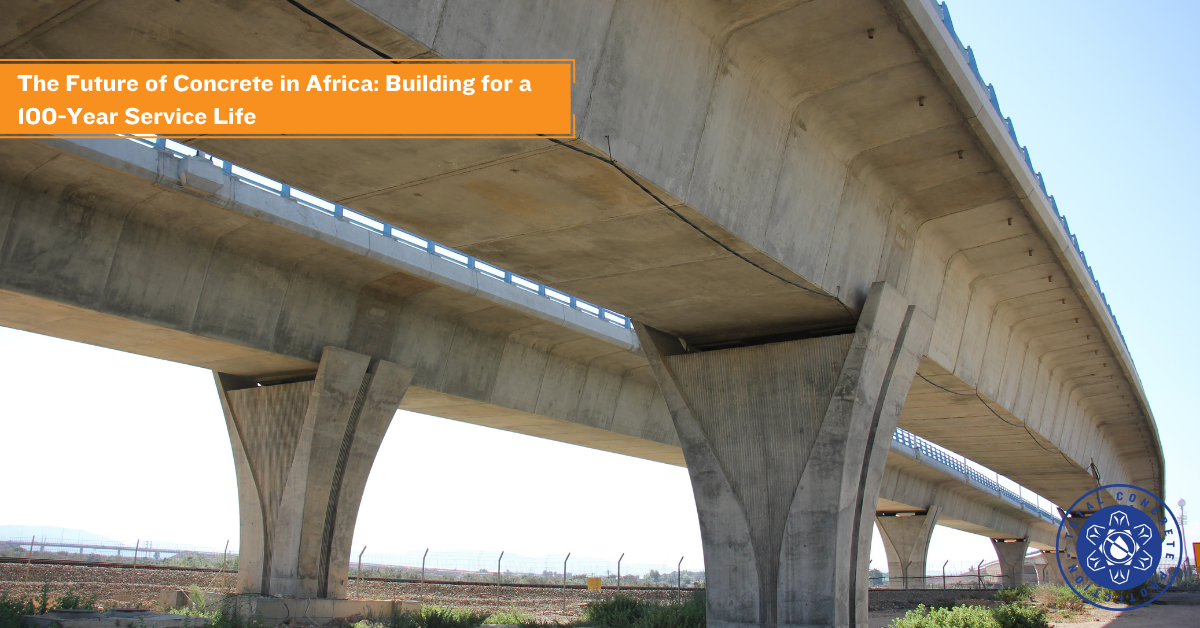
After more than a decade in the construction industry, one pattern has become clear: far too many concrete structures in Sub-Saharan Africa fail well before they reach their intended service life. Reservoirs, treatment plants, bridges, and even commercial buildings are often in need of costly repairs after just 5 to 10 years, instead of performing reliably for 50 or 100 years. These incurred costs to the clients have a ripple effect where maintenance costs rise exponentially annually.
Achieving Ultra Durable Concrete
So how can we as engineers combat early deterioration and concrete durability issues? It starts with the material specifications of the concrete, which is entrusted to protect the reinforcing steel. One of the easiest ways to do this is by choosing the right system, combined with technology, to achieve not just durable concrete but ultra durable concrete by using the Penetron Crystalline system.
Concrete fails as soon as any contaminant enters the pore structure of the concrete. This affects the reinforcing steel and if not stopped, deterioration is inevitable. With Penetron Crystalline Technology you achieve self-healing concrete where cracks and voids of up to 0,5 mm in size will continuously seal, protecting the concrete from ingress that causes deterioration.
Combined with optimised mix designs with low permeability, durability indexes and testing during construction, performance-based specifications that focus on service life rather than just strength, the Penetron system will reduce durability issues from the beginning and further protect the concrete to ensure an ultra durable concrete is maintained.
Proven Performance: The Case for a 100-Year Structure
With results such as the Carbonation Test, conducted in Europe, which indicates an additional service life of 60 years with the addition of the Penetron Admix and Permeability test results showing that concrete enhanced with Penetron Admix is 68 times less permeable than the controlled sample, the benefits gained with adding Penetron Admix to concrete provides a simple solution to build the concrete for the future to last a Century or more.
A Call to the Industry
I encourage professionals to engage with the team at Penetron Africa to see how they can help you with your next concrete infrastructure project that will serve the future. Current durability specification perceptions have been disproven so let Penetron give you perspective on what ultra durable concrete really is.
As concrete technologists, engineers, and contractors, we all have a role to play in shifting the focus from initial cost to total life-cycle value. The tools are already available. It’s time to use them.
About the Author
Jonathan Whitehead holds a National Diploma in Civil Engineering and serves as a technical engineer at Penetron Africa. With over a decade of experience in large-scale concrete infrastructure projects across Sub-Saharan Africa, he specialises in durability engineering and crystalline waterproofing systems for long-life concrete structures.